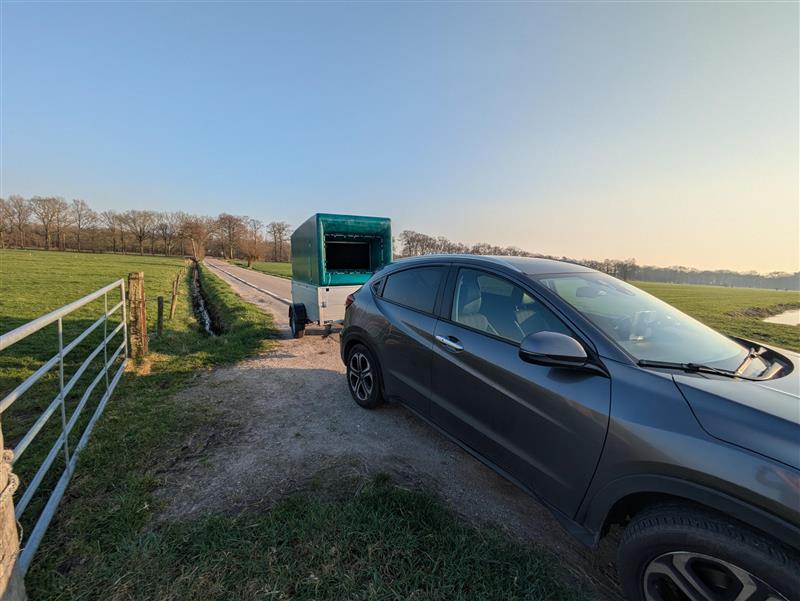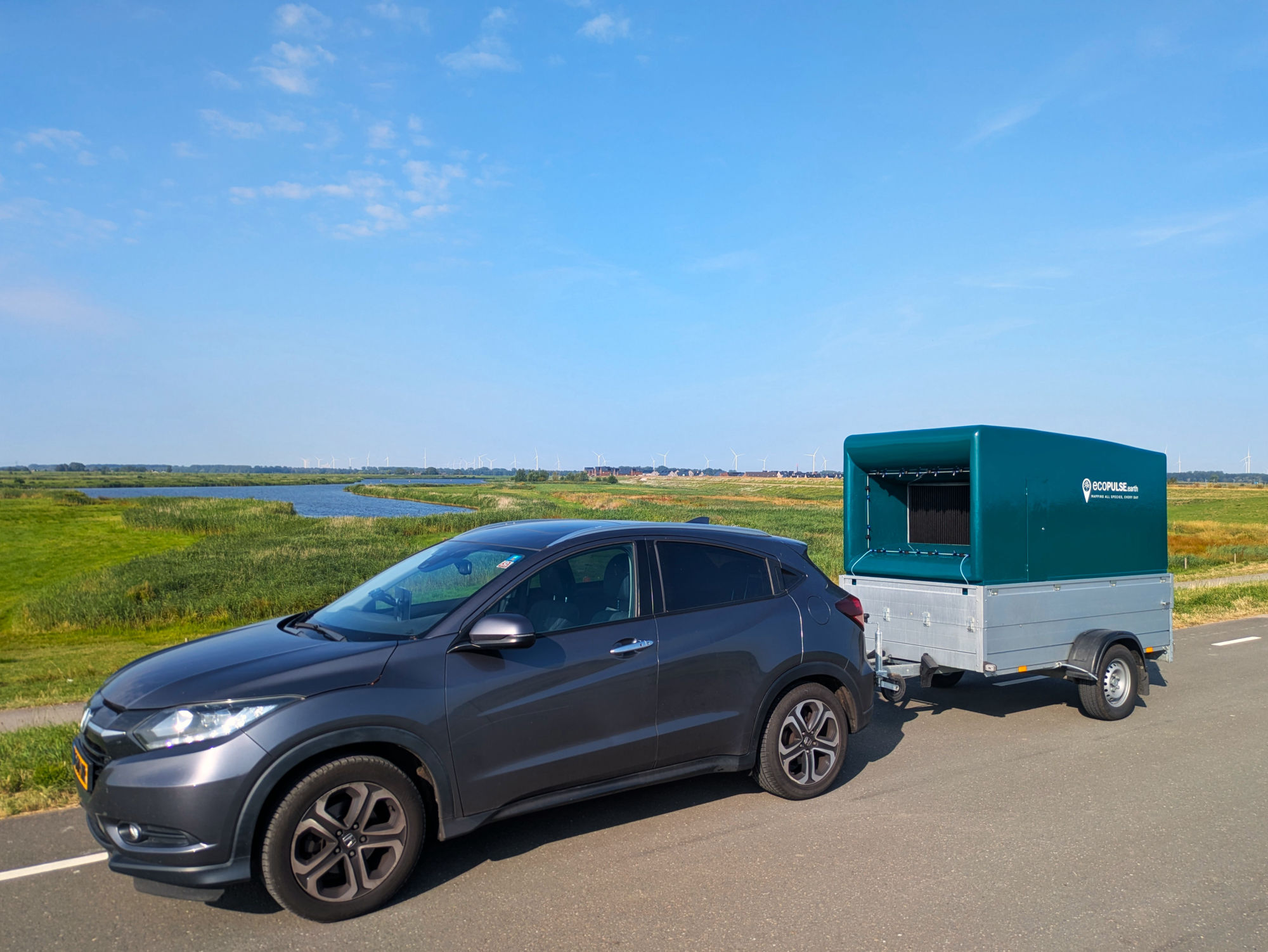
Using our mobile system, we collect air samples along routes through or around your area. Our 2026 pilot programme is fully booked; we assess new requests case by case.
Thank you for the strong interest. The 2026 pilot programme is closed, but we continue to assess requests case by case. Do you have a new or innovative idea, such as a special location, a different species group or an application beyond eDNA? Tell us about it.
Baseline and periodic monitoring for policy, restoration programmes and regional governance. Early screening for invasive species and monitoring of protected animal species. Supports Natura 2000 reporting and environmental visions.
Early detection of pests and fungi for more accurate control and IPM planning. Reduce crop protection inputs, cut costs and improve plant health. Potential support for agri-environment schemes, biodiversity KPIs and CAP processes for the nature-inclusive transition.
Large-scale monitoring, measure evaluation and early detection of rare or invasive species. Applicable for management planning, subsidy reporting and multi-year trend analysis at landscape level.
Biodiversity monitoring for drinking water companies and their extraction areas. Early detection of invasive species and baselines for nature-inclusive water and riparian management for water authorities.
Baseline and repeat monitoring for nature-inclusive construction projects. Support biodiversity targets for developers, municipalities and housing corporations. Supports BREEAM-NL certification and CSRD biodiversity reporting as supplementary evidence.
Use high-volume mobile airborne sampling for your own analysis and validation studies. We actively seek partners for detection probability research and method validation. Suitable for comparison studies with traditional field methods.
Environmental consultancies are welcome partners for project integration, reporting, and field coordination.
Organisations we work with


Typical airflow velocity ranges from 3–25 m/s depending on road type and conditions.
One sample covers ~25 km of roads: typically a 5×5 km area or higher detection density within 1×1 km.
Range 2,000–10,000 m³ per sample depending on speed and route length.
Results can be visualized as spatial summaries and project-area dashboards, tailored to your question and analysis method.
Subscription monitoring supports time-series comparisons to track biodiversity changes across seasons or years.
Deliverables depend on the selected workflow: targeted qPCR (fast, species-specific) or metabarcoding (broad scan).
We collect DNA fragments suspended in air to detect species presence without trapping or visual confirmation.
One sample can cover ~25 km at normal driving speed, for example a broad scan at 5×5 km or denser sampling within a 1×1 km area.
Choose rapid, species-targeted qPCR or a broad taxonomic scan via metabarcoding. Research groups can also analyze samples themselves.
Analysis performed by a certified molecular laboratory. Quality documentation available on request.
We align scope, expectations, and interpretation with your context: policy, conservation management, agriculture, or research.
Detectable species groups
Mammals, birds, insects, fungi, plants and bacteria are generally well detectable with airborne eDNA. Fish, reptiles, amphibians and soil organisms are more dependent on biotic and abiotic environmental factors.
Ideal for pilots and method comparisons.
Clear budgeting for area-based programs.
Fast answers for key species questions.
Reproducible monitoring across seasons and years.
We typically start with a short consultation to define goals, area, constraints, and the best analysis route.
Our 2026 pilot programme is closed. Municipalities, provinces, water authorities and research institutions with a concrete question or a new idea are welcome to contact us for a no-obligation conversation.
Our knowledge base contains 16 in-depth scientific articles on airborne eDNA, from theory to regulation.
Open Knowledge BaseEcoPulse is built on the conviction that we can protect nature better by measuring it more often and at greater scale, from entire villages and nature reserves down to the smallest organisms that live there.
"Making invisible life visible: at scale, and far more often."
Airborne eDNA, detecting animal species from DNA traces in the air, was first reported in 2021. We immediately recognised the potential: a technology that for the first time makes large-scale biodiversity monitoring possible at the scale where policy and nature actually operate. From the largest mammals to nearly invisible fungi and bacteria, all from a single sample.
It is precisely this aspect that makes the technology so broadly applicable and therefore scalable, making it possible to monitor far more frequently. Because only by measuring regularly and at scale do we track the heartbeat of nature. And it is that rhythm, that pulse, that is growing ever weaker and more irregular.
Tell us your project area and question. We'll propose a sampling plan (incl. km² coverage) and the best analysis option for your timeline.
ecopulse.earth