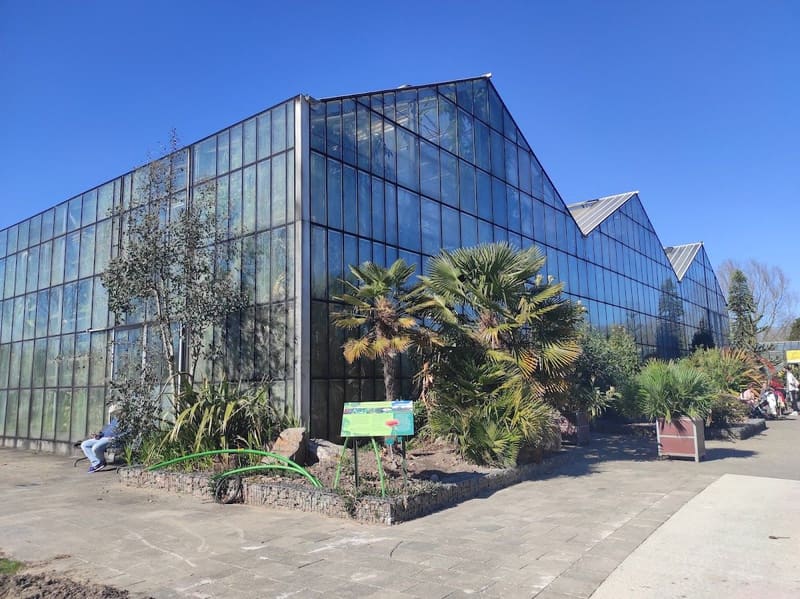
How well does DNA from the air reflect the plants growing nearby? TNO and SGS Portugal investigated this in the tropical greenhouse of the Utrecht University Botanic Gardens. TNO carried out the sampling and both TNO and SGS subsequently performed lab analysis and bioinformatics. Willem van Strien, one of the founders of EcoPulse, supported some of the first sampling pilots, analysed and interpreted the data and wrote the scientific article as first author. It was published in the scientific journal Environmental DNA, in the special issue Environmental DNA Traveling by Air. The article is open access and free for everyone to read.
A garden where you know exactly what grows
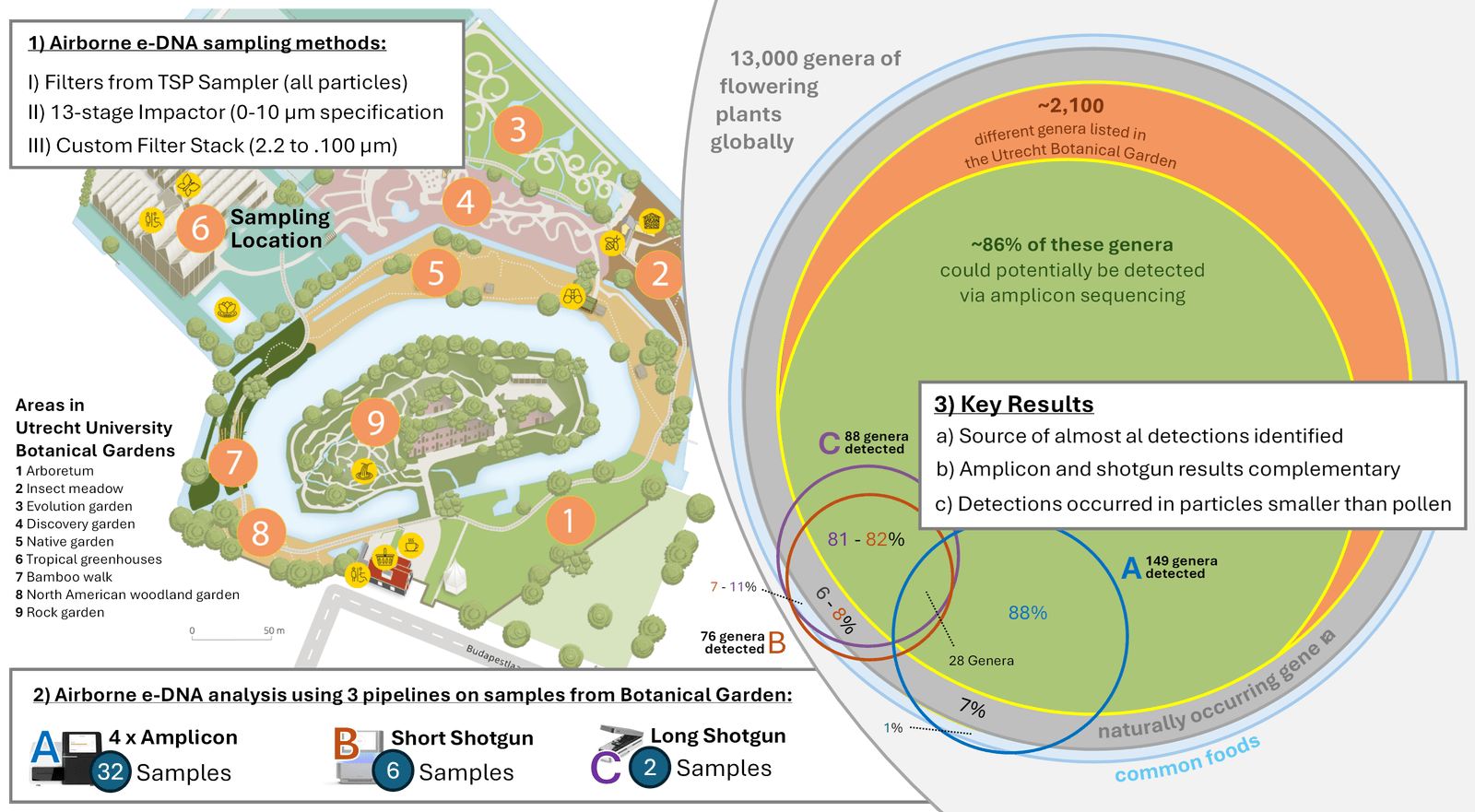
A botanical garden is an ideal test site: it keeps a precise record of its plants. The Utrecht University Botanic Gardens hold more than 8,000 species from around 2,100 genera. That makes it possible to check every DNA detection from the air.
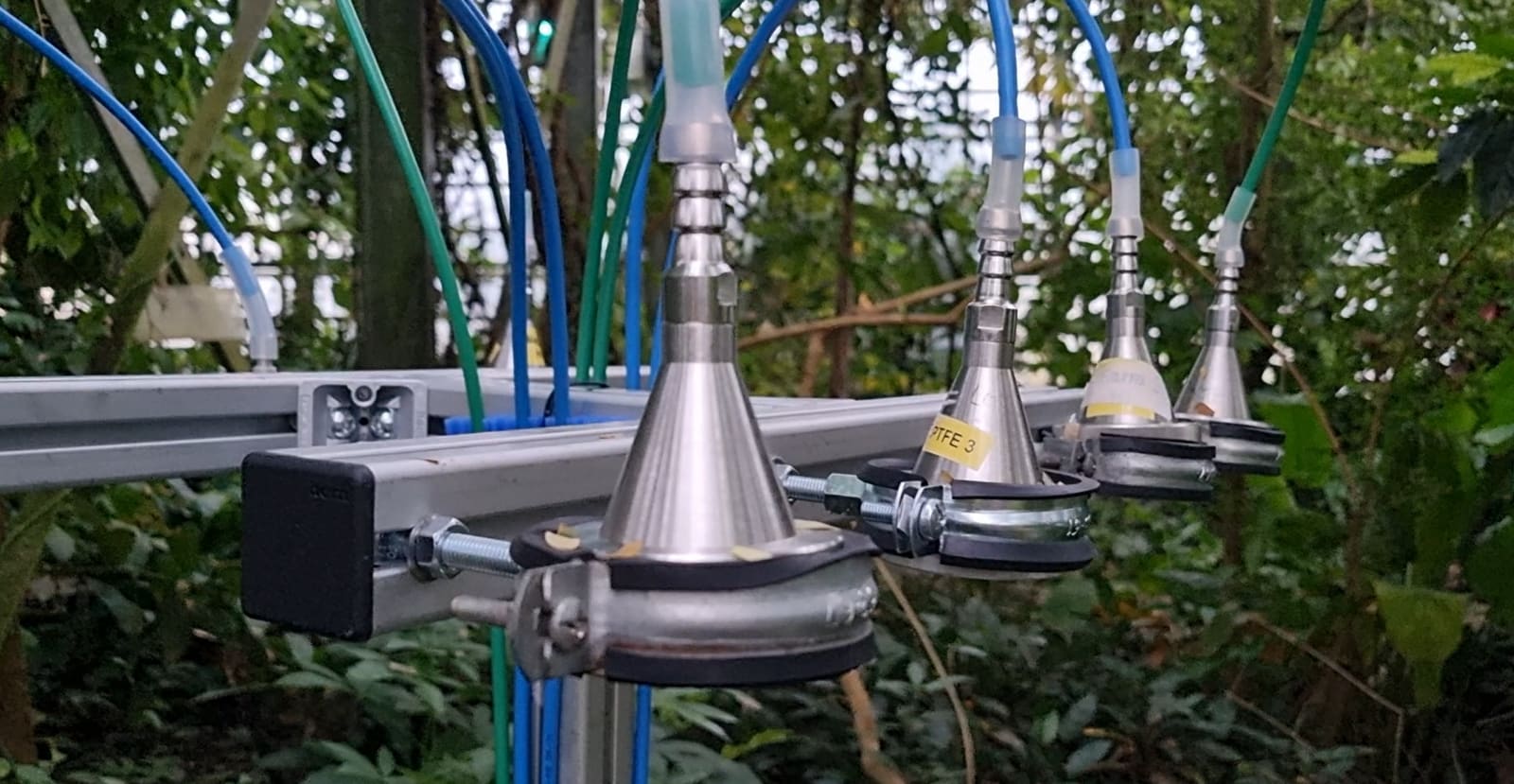
The air was sampled in December 2024 and February 2025, outside the pollen season, using three types of samplers:
The samples were analysed in three ways: with targeted DNA barcoding (amplicon sequencing) and with two forms of untargeted shotgun sequencing, one using short and one using long DNA sequences.
The results
In total, 209 plant genera and 192 species from 85 families were detected. Most samples were analyzed with the targeted method and it also found the most genera (149), 88 percent of which actually grow in the garden. The two shotgun methods found 76 and 88 genera, 81 to 82 percent of them from the garden. The methods complemented each other well, each finding partly different genera.
Detections that were not on the garden list could usually be explained too: plants growing in the surroundings, or food such as tomato, cucumber and spinach; likely from the restaurant or the staffs lunchbox. After review with the garden's botanists, only three species remained without a plausible source. A striking case was Mucuna macrocarpa: it grew in the garden until 2022 and was still detected in the air.
Smaller than pollen
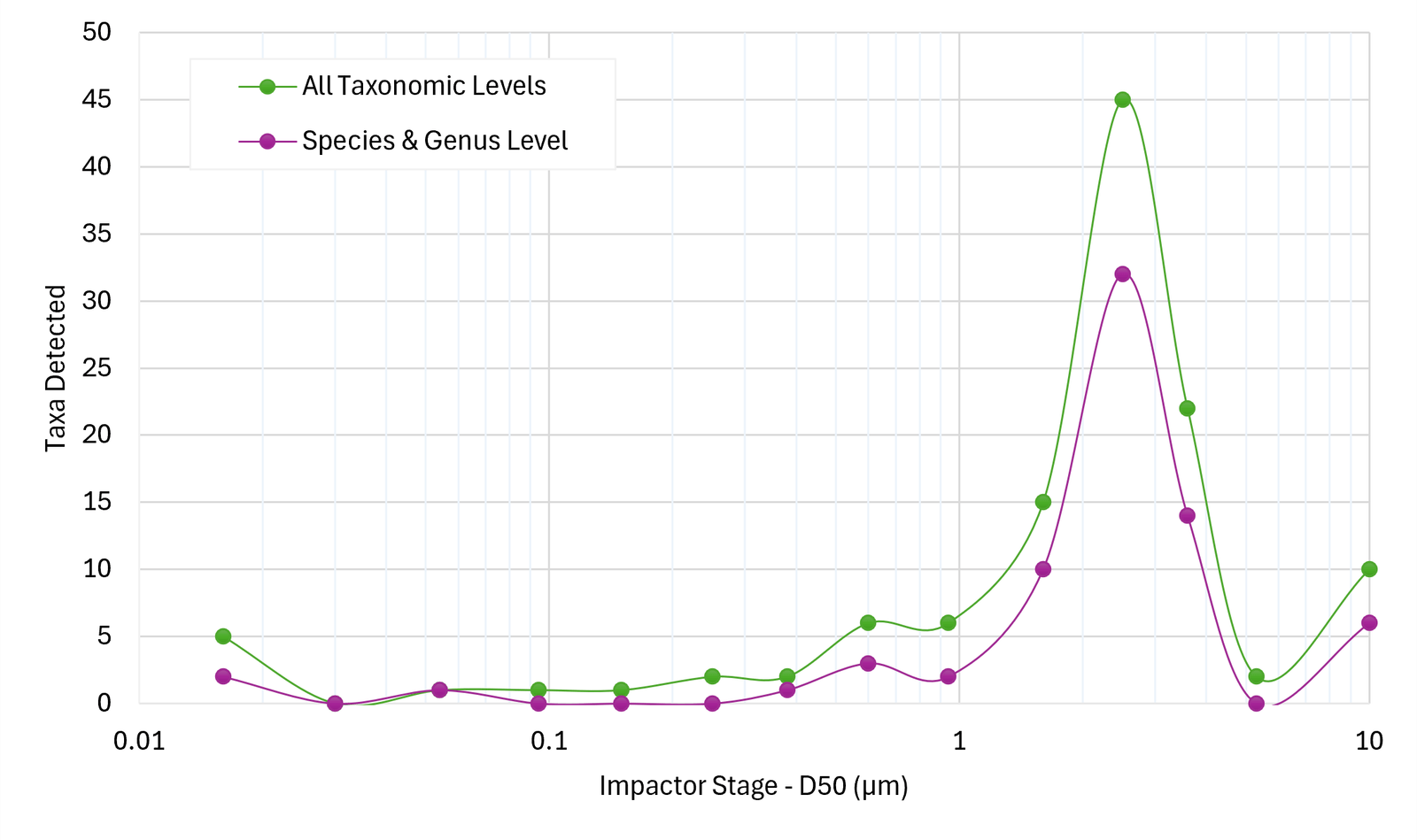
Most plant taxa were found on particles of around 2.5 micrometres. That is much smaller than a pollen grain (10 to 100 micrometres). Plant DNA therefore travels not only on pollen, but mainly on small fragments of plant material. Such small particles stay airborne for a long time and can travel far. Larger particles (over 40 micrometres) also contained plant DNA. Sampling height, 1.5 or 3 metres, made no difference.
What this means
The main limitation is not the sampling itself but the reference databases. For many plants the DNA has not yet been well documented, so a detection cannot always be traced to species level. This is even stronger for shotgun methods: the database used contains only 78 genera from the garden. That most of these were still found shows that the method works.
Read the article
Van Strien, W.J., Fabriek, J., Marissen, I.M.F., Plomp, N.D., Pinto-Neves, D., Zuzarte-Luís, V., Rodrigues, J.A., van Leeuwen, H.C. and van de Ven, H.C. (2026). Airborne Plant eDNA Reflects Local Biodiversity: A Multi-Method Assessment in a Botanical Garden. Environmental DNA 8: e70351. Read the article