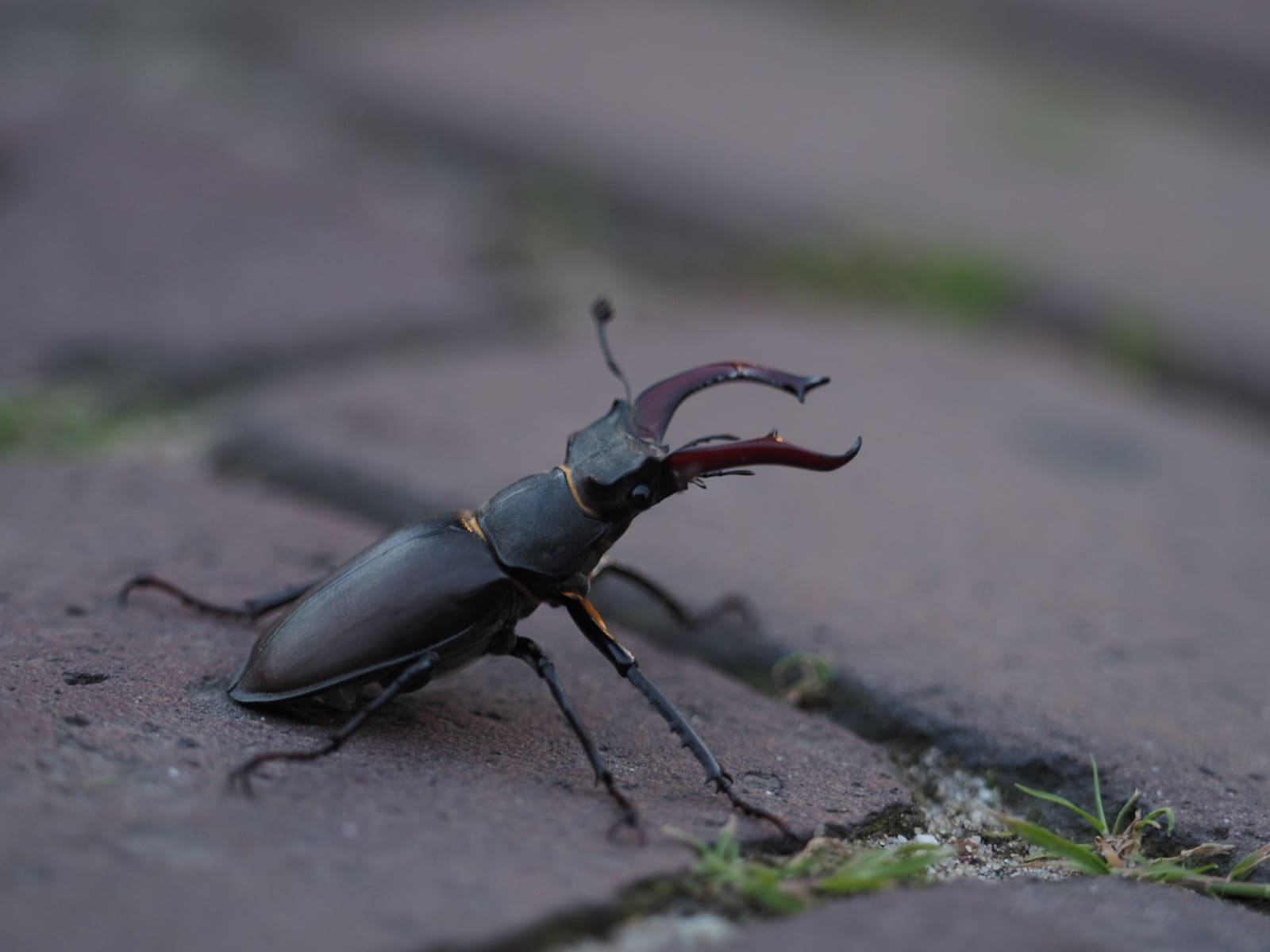
An otter in a stream in Amersfoort, stag beetles along the Waal dyke and a long-eared bat that barely makes a sound. Last summer a special sampling trailer drove through Amersfoort, Leiden and Nijmegen, capturing traces of DNA from the air. The results are now in: it took several weeks to go through and check the thousands of detections. As far as we know, this is the first time the method has been used in Dutch cities. Together the measurements revealed DNA of more than two thousand different species, many of which are hard to find with traditional fieldwork.
Measuring local biodiversity from the public road
Animals constantly leave small traces behind, such as hairs and skin flakes. Some of this material floats through the air and contains DNA. With this environmental DNA, or eDNA, researchers can detect which species have left DNA in an area. Airborne eDNA is therefore an interesting, complementary method in the ecologist's toolbox.
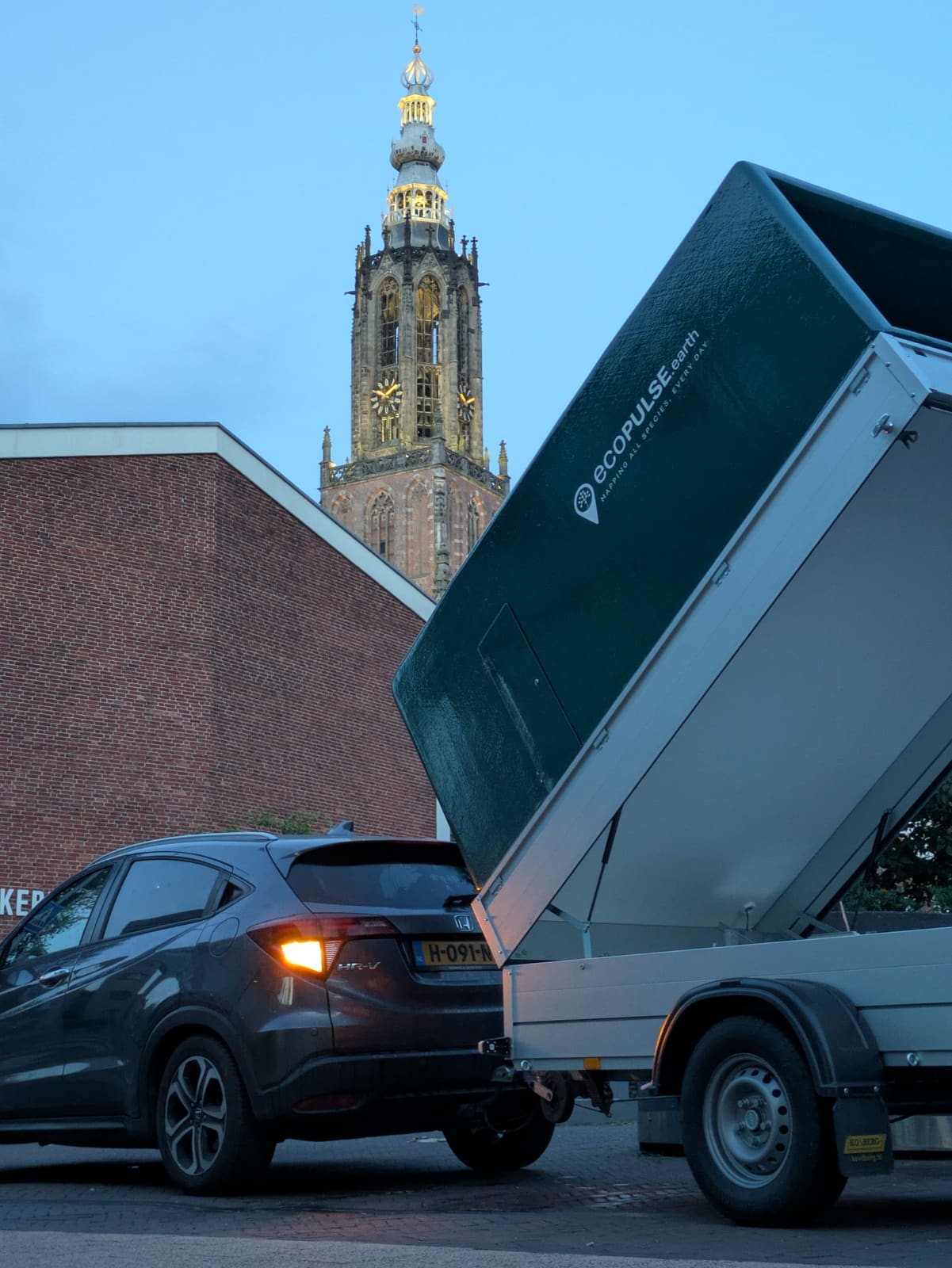
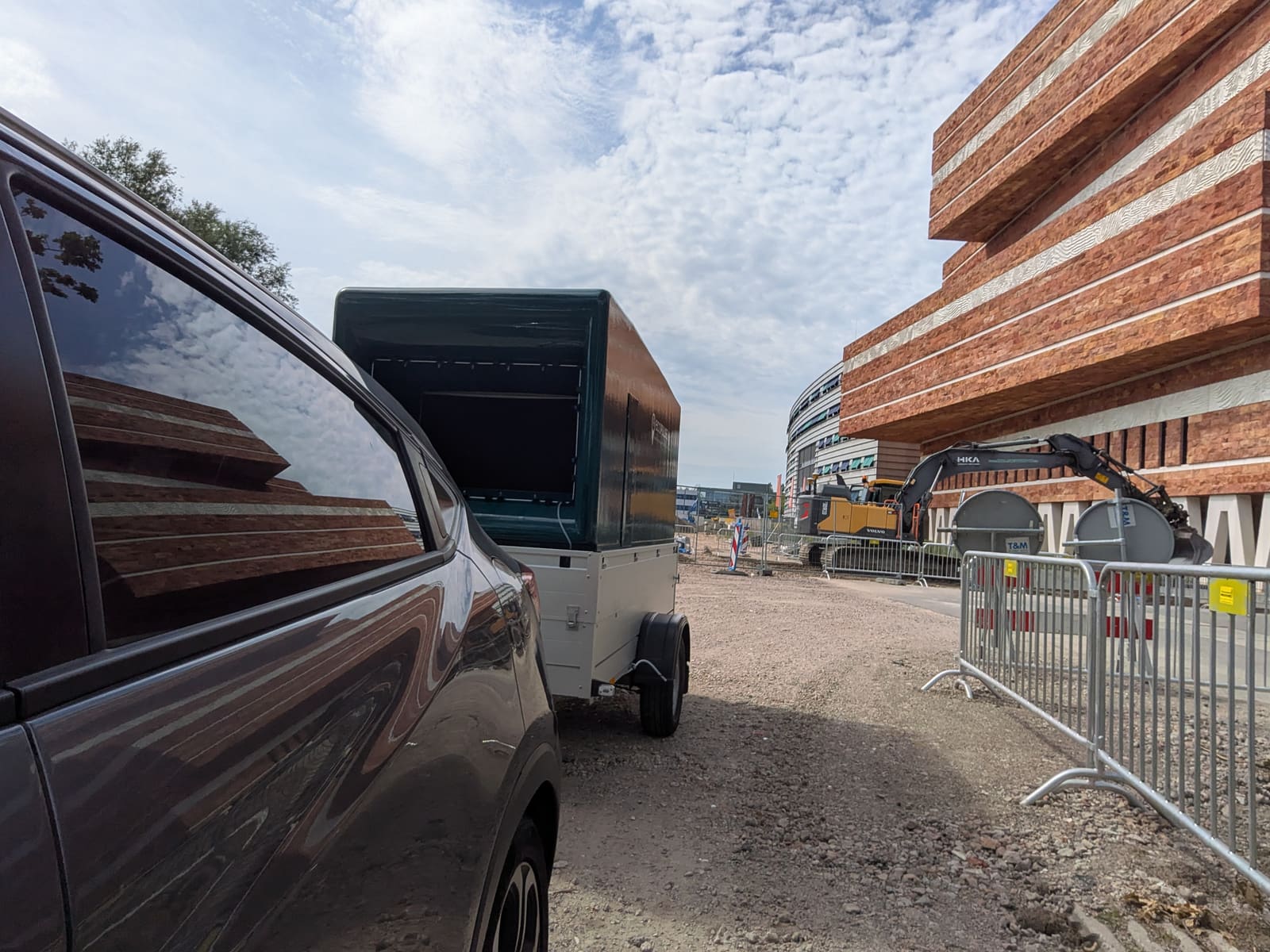
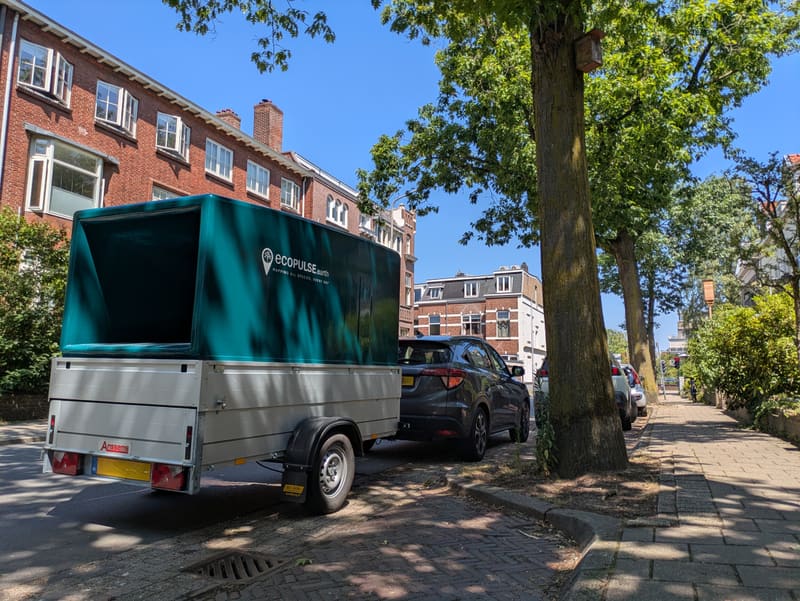
The Dutch company EcoPulse developed a dedicated sampling trailer for this purpose. It is towed behind a car and captures DNA traces from the air. A laboratory then determines which species the DNA belongs to. The method was tested for the first time last summer in Amersfoort, Leiden and Nijmegen.
The measurements show which species left DNA in an area, but not exactly where an animal lives. DNA can travel hundreds of metres on the wind, so additional fieldwork is sometimes needed to confirm whether a species occurs at a particular spot. The method complements the work of ecologists.
Nijmegen: stag beetle and basic nature quality (BKN)
In Nijmegen ten routes were sampled. The lab then read around ten million fragments of DNA. This yielded almost nine hundred animal species and almost seven hundred fungal species, many of which had not yet been recorded for Nijmegen in the National Database Flora and Fauna (NDFF). The stag beetle, Europe's largest beetle, was found mainly where it belongs: on the sandy soils in the south and east of the city, but also along the Waal dyke. Around 80 species belonging to the Basic Quality of Nature (Basiskwaliteit Natuur, BKN) framework also turned up: indicators of everyday nature outside protected areas, from lichens and dragonflies to amphibians and birds.
‘Finding so many species this way, on top of what is already in the NDFF, is very valuable. It gives us an ever better picture of the natural values in Nijmegen and how we can take them into account’, says Joep van Belkom, city ecologist at the municipality of Nijmegen.
Amersfoort: otter and the whispering bat
In Amersfoort the trailer mostly drove in the evening, to increase the chance of finding bats. The air samples contained DNA of the four most common bat species. The less common long-eared bat also showed up in the results. This ‘whispering bat’ makes such quiet sounds that it is hard to find with a bat detector. The otter, back in a stream in Randenbroek since this summer, was also found in the air.
Ecologist Jan Dirk Buizer of the municipality of Amersfoort sees opportunities for follow-up research: ‘We will look carefully at which species we could use this for on a structural basis. Finding the otter is a great result.’
Leiden: airborne eDNA alongside the BioBlitz
In Leiden three routes were driven during the annual BioBlitz in the area of the future PanoramaPark. During a BioBlitz, volunteers search for as many species as possible in a short time, which makes the two methods easy to compare. Those three routes alone yielded more than six hundred animal species and more than four hundred fungal species. DNA of a camel or dromedary even turned up in the results. The DNA cannot tell which of the two it was, but the explanation was close by: a farm about 500 metres away, upwind, keeps both.
Jens van der Meer of the Citizen Science Lab, associated with the Leiden Biodiversity Network, sees opportunities to include the data in the BioBlitz. Volunteers could then search specifically for species that so far have only been detected through airborne eDNA. ‘If airborne eDNA lets us follow more species and get more people excited about nature, we win twice’, he says.
Does every city have its own insect mix?
Because the three cities were sampled in the same period, the results could be compared side by side. The cities differed mainly in their insects, such as beetles, flies and moths. Of the insect species found, 55 percent were detected in only one of the three cities. For vertebrates, which are more often reported through observations, the differences were much smaller. More measurements are needed to show whether every city has its own mix of insect species.